Bio
This page details a brief history of Raymond. It's broken into his early life, his undergraduate career at the University of Miami, his graduate career at Scripps Institution of Oceanography, and personal interests and hobbies.
Raymond got his start in Dr. Cassandra Gaston's atmospheric chemistry laboratory at the University of Miami, studying physical production mechanisms of lake spray aerosols. There, he investigated the filtration efficiencies of various face masks and air filters against harmful algal bloom toxin production in lake spray.
Next, his journey continued at Scripps Institution of Oceanography at the University of California San Diego under the co-advisement of Dr. Kimberly Prather and Dr. Grant Deane. There he studied the physical production mechanisms of sea spray using a variety of breaking wave proxies. He mastered the state-of-the-art Scripps Ocean-Atmosphere Research Simulator (SOARS), and led several campaigns which characterized the system, investigated wind speed effects, studied how biological activity influenced sea spray, and determined the role of temperature on sea spray production. This work resulted in the successful defense of his Ph.D. dissertation titled "Making a Splash: Characterizing Sea Spray Aerosol Emissions Using the Scripps Ocean-Atmosphere Research Simulator (SOARS)".
Raymond is continuing his investigation of sea spray aerosols at Heidelberg University during his postdoctoral position. He is diverting away from laboratory experiments to gain experience with understanding how climate models treat sea spray. As one of the main natural aerosol drivers of the climate system, it is vital to understand how models treat sea spray, and how these parameterizations can be improved. He is constructing a simple sea spray emissions model constrained by aerosol optical depth measurements, to generate an efficient and applicable sea spray emissions scheme to be integrated in forecast models across scales.

Early Life
Raymond grew up in a suburb of Denver, CO, frequently spending time exploring the mountains around him. He was always fascinated by the brown cloud phenomenon in the Denver area, and knew his passion of the earth system would drive his career. He was further fascinated by the ocean, and wanted to pursue a degree involving the marine ecosystem. His god father dove with great white sharks, and partially served as inspiration for Raymond to pursue a career in marine science. For 4 years, he lived in Conifer, CO, a small mountain town that inspired his fondness of nature.
Undergraduate Career
Raymond double majored in marine science and applied physics (one of three in his graduating class to have this double major) at the University of Miami and earned his B.S. in May 2020. He also minored in mathematics. He began research in Dr. Cassandra Gaston's atmospheric chemistry lab investigating lake spray aerosols and the transfer of toxins produced during harmful algal blooms. In addition to Raymond's research at UM, he was also heavily involved in campus life, working as a peer mentor and tour guide, supervising the information desk at the student centers, and working several jobs in housing and residential life.


Graduate Career
Raymond pursued his masters of science and doctorate of philosophy degrees at the Scripps Institution of Oceanography at the University of California San Diego under the advisement of Dr. Kimberly Prather and Dr. Grant Deane. He received his M.Sc. in December of 2021 in Oceanography, and Ph.D. in Earth Sciences in June 2025. At SIO, he has investigated physical production mechanisms of sea spray aerosols, principally using the Scripps Ocean-Atmosphere Research Simulator (SOARS). Spurring from his love of SOARS, he is known as "the SOARS guy" to the student body. In addition to his studies and research, Raymond has served on the graduate student council and has been a peer mentor (officially and unofficially) for fellow students.
Postdoctoral Career
Raymond transitioned to aerosol modeling at a global scale in the icosahedral nonhydrostatic (ICON) atmospheric general circulation model. He works under the advisement of Prof. Dr. Stephanie Fiedler at Heidelberg University in Germany.
His first project entails developing a simple plume model to capture global mass burdens constrained by aerosol optical depth estimates of sea spray aerosols.

Hobbies & Interests
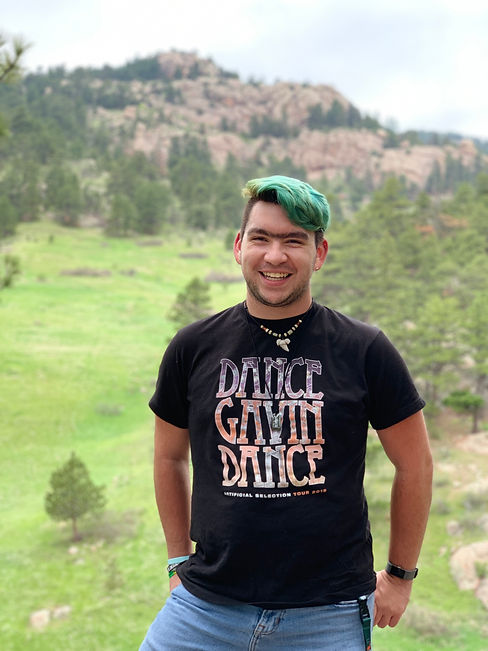
Raymond is an avid mountain-lover, and enjoys being surrounded by nature at elevation. In his free time, he is known to attend concerts and can be caught tossing around frisbees with friends. He is always happy to watch friends' pets and has yet to meet a pet that doesn't love him. After a busy week, he can be found playing board games with friends and supporting them in their passions.